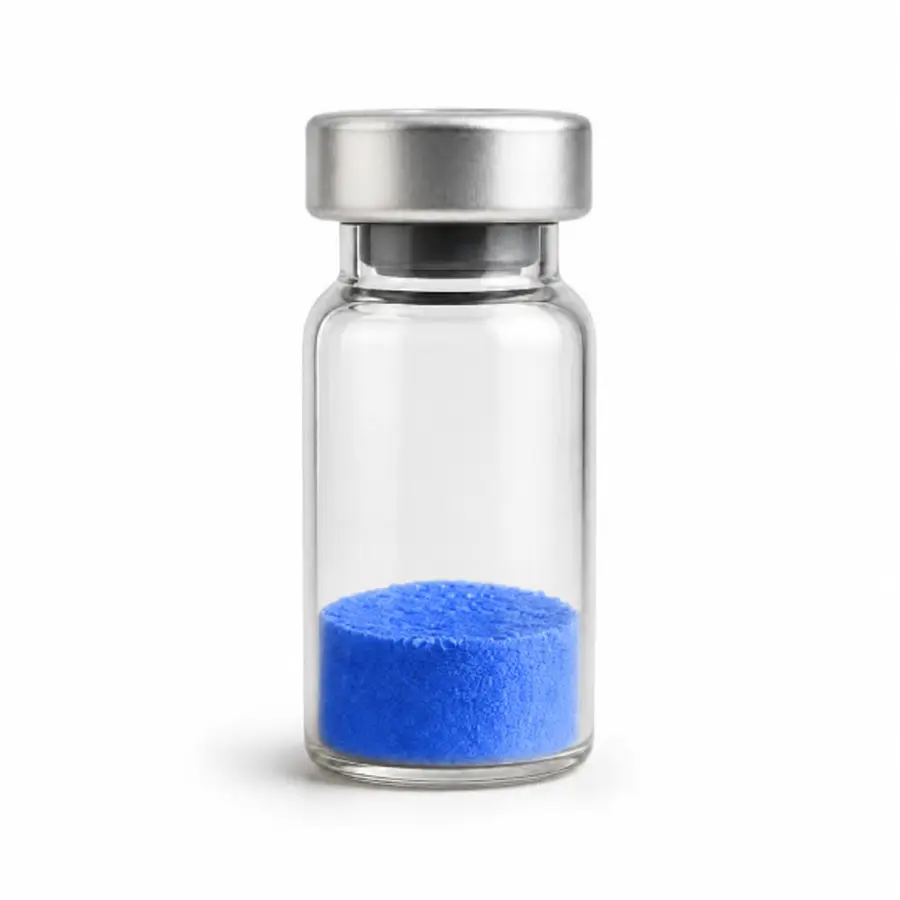

A peptide bound to copper
GHK is the amino-acid sequence glycine-histidine-lysine. GHK-Cu refers to its copper complex, making metal coordination part of the compound’s identity. The free peptide, copper salts and the peptide-copper complex should not be treated as interchangeable test materials.
Extracellular-matrix research
An early fibroblast-culture study investigated collagen production following exposure to GHK-Cu. A later rat wound-chamber experiment measured collagen, glycosaminoglycans and other components of developing connective tissue. These studies help explain interest in extracellular-matrix remodelling, the process through which structural material around cells is produced and reorganized.
What these findings can and cannot show
A change in collagen production in cultured cells is not the same as a demonstrated cosmetic result in people. Likewise, an implanted rat wound chamber is a specific experimental model, not a substitute for clinical evidence about a particular formulation. Product identity, copper content and the measured endpoint all matter when comparing results.
Research topics at a glance
- Collagen and extracellular-matrix biology
- Skin and epithelial repair models
- Inflammatory and oxidative-stress signalling
- Copper coordination and formulation stability
Understanding the reference vial
The amount printed on a vial identifies its stated catalog content, not an experimental concentration or a recommended dose. The current app listing and the matching batch documentation should be used when checking the material actually available. Illustrations identify the compound and are not a certificate of its contents.
Interpreting the evidence
A research paper describes the material and conditions used by its investigators. It does not test every commercial source. A matching analytical report can help address identity or content, but it does not by itself establish clinical effectiveness, sterility, or safety. Keep analytical quality and biological evidence as separate questions.
Sources and further reading
For research reference only. Not medical advice or a recommendation for human or veterinary use. No dosing or administration instructions are provided.